
What Happens When Five Organisations Become One? Lessons in Building Culture Through Change

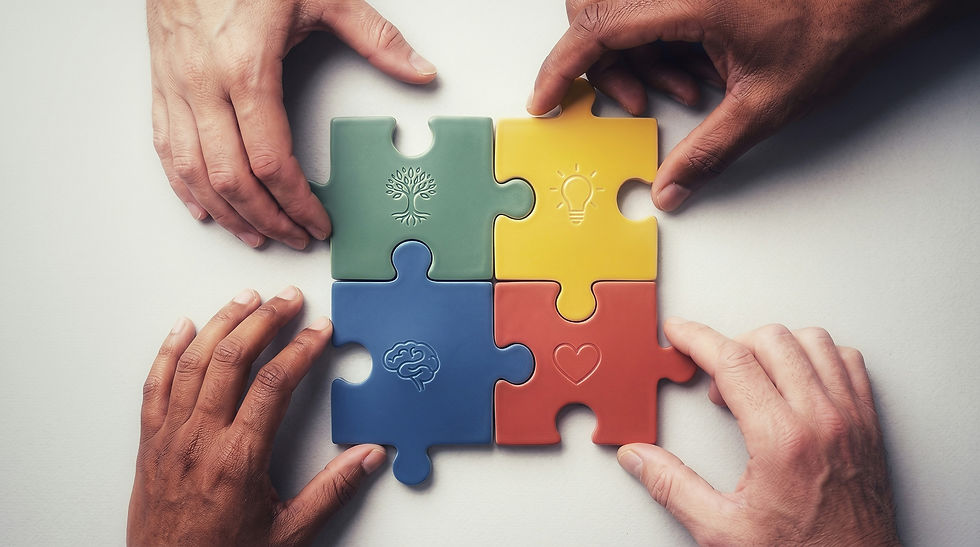
Mergers and acquisitions are usually measured through financial performance, operational integration and the delivery of commercial targets. Yet, long after systems have been combined and structures redesigned, one question often determines whether integration succeeds:
Do people trust the organisation they're now part of?
That question sat at the centre of our recent Coffee & Culture conversation with Jonny Friedman, SVP People & Talent at Acumetis, who shared the organisation's experience of bringing together five specialist businesses under a single brand and culture.
Rather than presenting a completed transformation, Jonny alongside the broader HR team, including Sarah Brown, shared a culture that is still evolving. Their openness provided a valuable insight into what integration really feels like for employees and leaders and highlighted several lessons for HR teams leading significant organisational change.
The challenge wasn't combining businesses. It was combining experiences.
The five organisations were strategically complementary, covering different stages of the pharmaceutical commercialisation journey. Bringing them together created a stronger proposition for clients.
However, organisational design was only one part of the challenge.
Each business brought its own leadership style, decision-making processes, employee expectations and unwritten cultural norms. One organisation valued highly structured processes and consultative leadership. Another was built around agility, speed and entrepreneurial decision-making. Employees who had previously worked in founder-led businesses suddenly found themselves operating within a private-equity-backed global organisation, where commercial performance was naturally under greater scrutiny.
As Jonny explained:
"On the surface, we felt very similar. But in reality... we realised we were more and more different than we anticipated."
This difference became particularly visible in the UK. When one company's founders exited immediately following acquisition, many employees felt they had lost their advocates. Meanwhile, another organisation retained its CEO, creating a perception that one legacy business still had a stronger voice in shaping the future. Although this wasn't intentional, it influenced how employees interpreted subsequent decisions.
The lesson is an important one: employees don't simply experience organisational change through formal announcements. They interpret what they see, who remains visible and whose ways of working appear to dominate.
Trust became the priority

The integration also disrupted many of the factors that had previously created stability.
Career pathways that had previously been well understood became uncertain. Promotion criteria changed. Employees who had understood exactly how decisions were made suddenly found themselves waiting for answers that leaders could not yet provide. Office moves reinforced perceptions that one culture was replacing another rather than something new being created.
At the same time, external market pressures significantly reduced demand, leading to workforce reductions while the integration was still underway. Employee engagement fell from around 90% to 55%, illustrating how quickly uncertainty can affect confidence when several changes occur simultaneously.
Rather than responding with another engagement initiative, the leadership team focused on rebuilding trust through consistent everyday actions.
These included leadership roundtables, listening sessions, clearer behavioural expectations linked to organisational values, cross-functional forums, technical learning sessions, increased social connection and redesigning workspaces to encourage greater interaction between legacy teams.
As Jonny described his role:
"My role is to be the conscience of the business... to protect our people, but also make sure that we're driving performance."
That balance – between commercial delivery and human experience – will be familiar to many HR leaders.
Looking back: what would they do differently?
One of the most valuable moments in the discussion came when Sarah Brown reflected on the early stages of integration.
Rather than immediately reassuring employees that the organisations were similar, in retrospect she believes they could have spent more time understanding the differences before trying to define the future.
"I would have let us sit back and listen a little bit more before jumping in..."
It is a common instinct during change to create certainty as quickly as possible. However, integration often benefits from creating understanding before creating alignment.
Five practical actions for HR leaders
Whether you're managing an acquisition, restructuring or another significant transformation, several practical actions emerged from the discussion.
1. Understand the legacy cultures before designing the future culture.
Don't assume organisations that look similar operate in similar ways. Explore decision making, leadership behaviours, communication styles and employee expectations before defining a shared future.
2. Pay attention to symbolism as well as strategy.
Who remains visible, where teams work, whose language is adopted and whose processes survive all influence how employees interpret fairness and belonging.
3. Accept that trust often falls before it grows.
Periods of uncertainty are inevitable. Rather than trying to eliminate every concern, create regular opportunities for leaders to listen, explain decisions and acknowledge what remains unknown.
4. Translate values into observable behaviours.
Shared values become meaningful when employees understand the behaviours that are expected, and those that are not acceptable, in the new organisation.
5. Measure culture alongside commercial performance.
Employee confidence, connection and trust are not separate from business performance. They influence whether integration delivers the outcomes organisations expect.
Culture integration is never complete
Perhaps the strongest message from the conversation was that culture integration is not a project with a finish date.
It is an ongoing process of helping people make sense of change, build new relationships and develop confidence in the organisation they are becoming part of.
The structures may change quickly.
Trust takes longer.
And for HR leaders, that may be the most important work of all.
🎥 Join the Make It Human Club (for free) and watch the full session replay here.

Comments